Coral reefs, which have survived five mass extinctions, now face an unprecedented threat from rapid environmental changes caused by human activity. In the past 30 years, we have lost more than half of the world’s coral reefs. Without immediate action, all shallow water coral reefs could vanish by the end of this century.
The stark white appearance of bleached coral reefs signals the death of countless colonies. This bleaching occurs when rising sea temperatures cause corals to expel their symbiotic algae, zooxanthellae, which are vital for their survival. Without these algae, the corals’ tissues become transparent, exposing their white skeletons. While bleached corals are not yet dead, they are more susceptible to stress and mortality. If conditions improve, corals can reclaim algae and recover, though this process may take weeks or months. Prolonged stress, however, will eventually lead to their death.
Climate change, leading to higher sea temperatures and increased ocean acidification, is a primary driver of coral bleaching. Additionally, pollution, overfishing, coastal development, and the curio trade exacerbate the stress on coral reefs. These combined pressures threaten the diverse marine life that depends on reefs—home to about 25% of all marine species—as well as the numerous resources humans extract, from medicines to building materials.
The potential loss of all shallow water coral reefs would be as devastating as losing every rainforest on the planet. The full impact of such a loss is unknown, but it would likely be catastrophic and unprecedented in human history. As “White Demise” travels, it seeks to inspire and mobilize individuals to learn about and engage in coral conservation efforts. This art exhibit highlights the critical balance of our environment and the essential role of coral reefs in sustaining life on Earth. Join us in this vital cause to help ensure a future where our oceans remain vibrant and alive.
The Artists
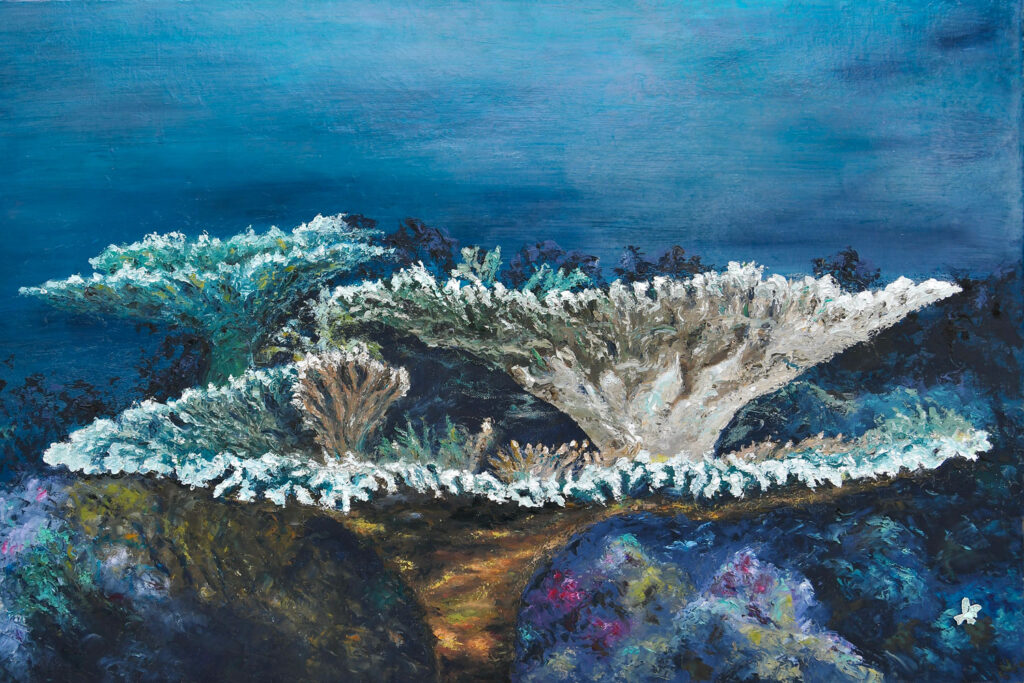
Lark Ivy
Tabular Acropora
Medium: Oil
Size: 24″ x 36″
Table corals are a type of Acropora coral, which form flat, table-like surfaces which provides protection for many fish species. Table corals are vital, because they are fast-growing and thrive in large colonies. But tabular Acropora are also among the most sensitive types of corals, vulnerable to heat stress, anchor damage, and disease.
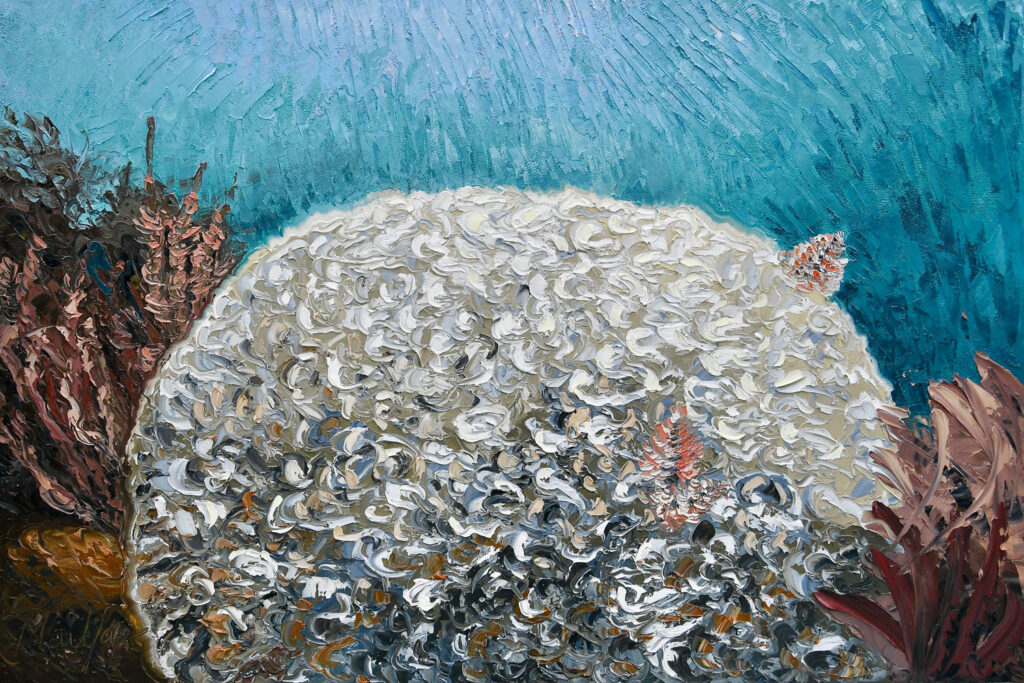
MaiYap
Brain Dead
Medium: Palette Knife oil on canvas
Size: 24″ x 36″
These cerebral-looking organisms, brain corals, lack brains but can grow six feet tall and live up to 900 years. They feed at night by stinging plankton and small fish, and absorb storm energy, shielding coasts from storm surges. However, coral bleaching threatens them, making habitat protection crucial for hurricane defense.
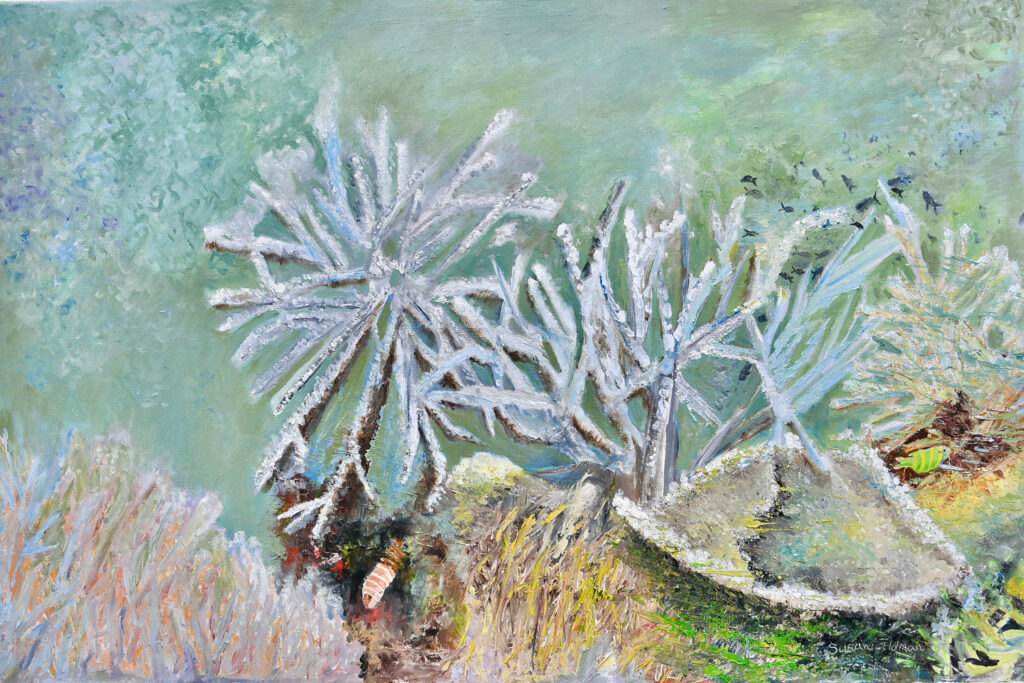
Susan Feldman
Weeping Staghorns
Medium: Palette Knife Oil on Canvas
Size: 24″ x 36″
Before bleaching, the color of Staghorn corals was golden tan or pale brown which came from the algae that lived within their tissue. Many are not dead but more at risk of starvation and disease. There is only a sad dismal 3% remaining.
Eumelia Castro
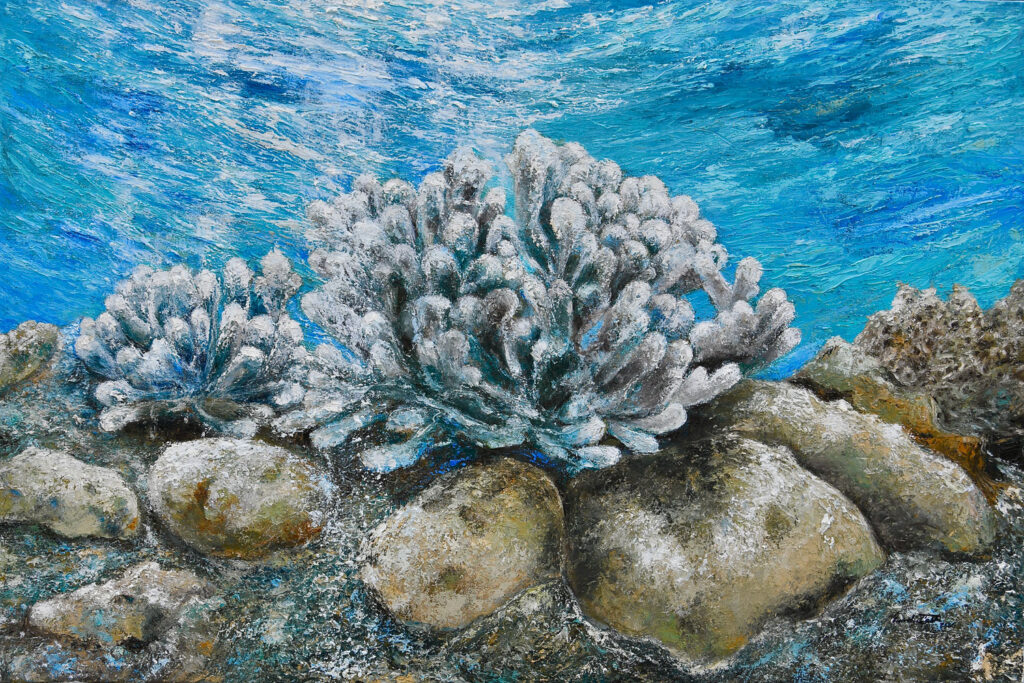
Turning white (Clubbed finger coral)
Medium: Palette knife Oil on canvas
Size: 24″ x 36″
Zooxanthellae, microscopic algae living inside corals, provide their vibrant colors. However, rising ocean temperatures from climate change cause corals to expel these algae, leading to bleaching. Other causes of coral bleaching include pollution, persistent low tide, and excessive sunlight. These factors disrupt the symbiotic relationship, resulting in the loss of coral coloration.
Bonnie Masdeu
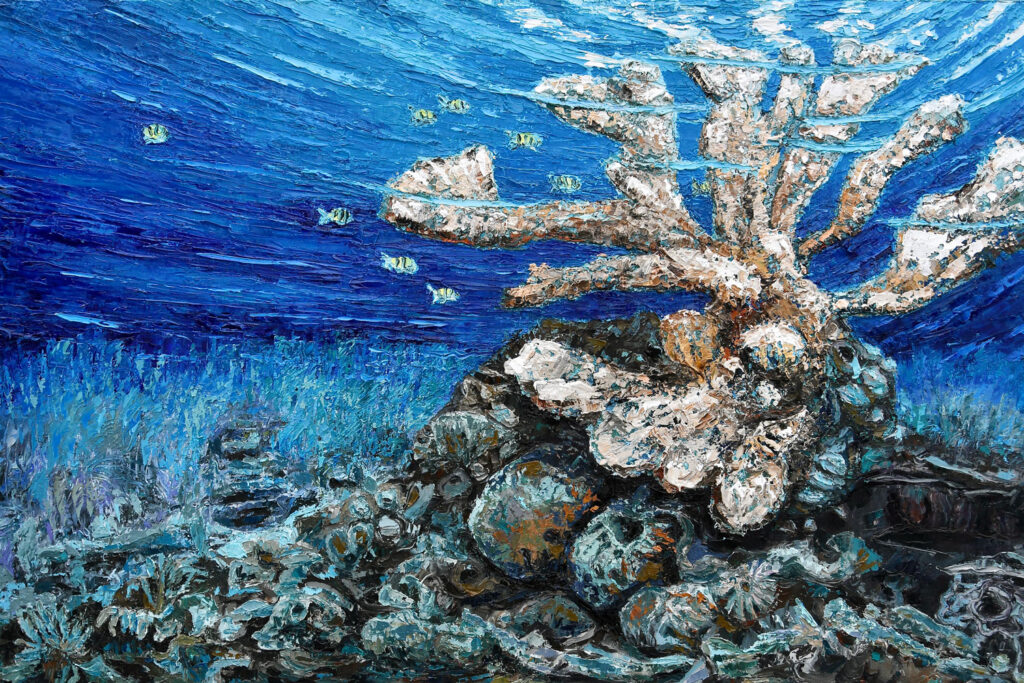
Boneyard
Medium: Oil Paint
Size: 24” x 36”
Elkhorn Coral branches are flat, broad and resemble the Elk antlers. This Coral is found in the shallow waters of the Western Atlantic, the Florida Keys, Miami, Gulf of Mexico, Bahamas and the Caribbean. Elk Horn Coral has declined 85% and is listed under the endangered species act of 2006.
Bonnie Masdeu
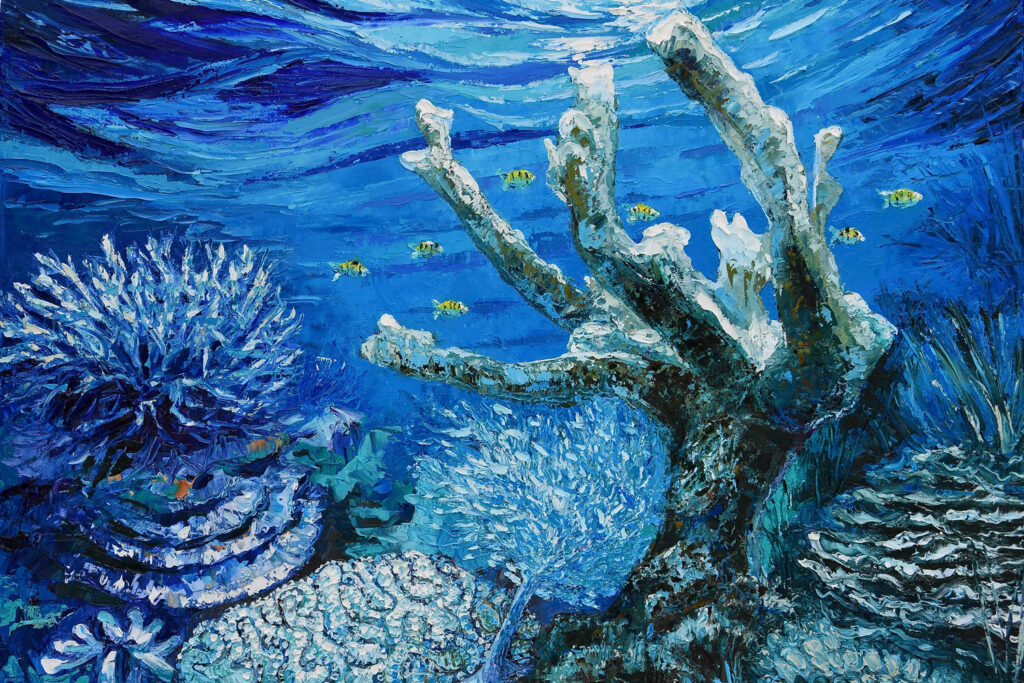
Coral’s Got the Blues
Medium: Oil Paint
Size: 18” x 24”
The garden of the sea has changed drastically and is worrying scientists and enthusiasts alike with the dangers of climate change destroying corals that took many years to mature. Some corals will be lost forever. In this painting are Elkhorn, Staghorn, Club Finger, Shelf, Brain, Lettuce and Fan Coral.
Magda Martínez
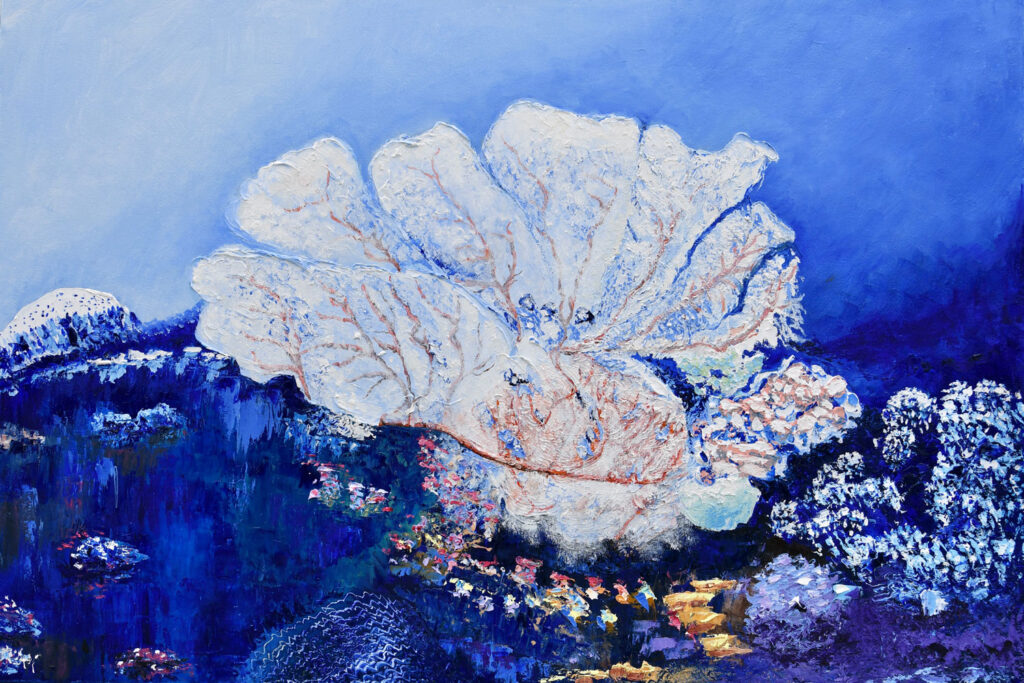
Dead Fan Coral
Medium: oil on canvas
Size: 24″ x 36″
If coral reefs die, biodiversity will decline drastically, affecting fish, turtles, and other sea creatures. Reefs, which house about 25% of marine species, provide vital habitat and food for over one million species. Their loss would lead to the collapse of marine ecosystems and significantly impact global ocean health
Ardis Bourland
Bleached Lettuce Coral
Medium: oil on canvas
Size: 24” x 36”
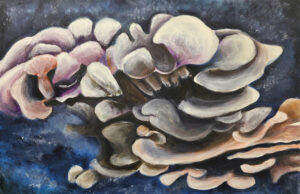
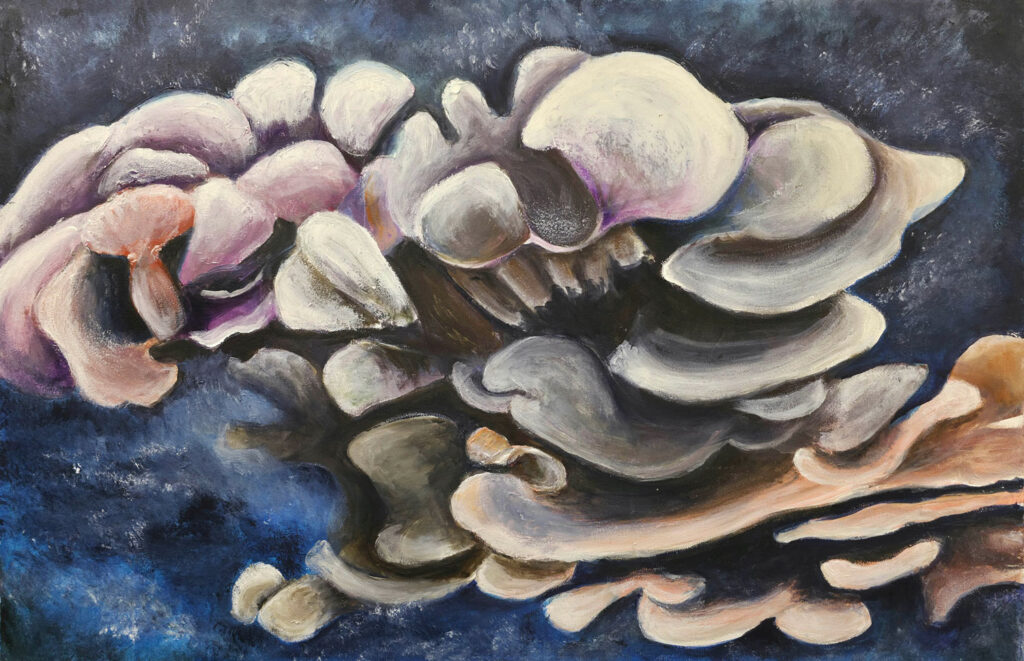
Lettuce Leaf Coral grows in a conical shape with large, ruffled edges resembling cabbages. These corals form extensive colonies on the seabed, offering vital shelter for marine life. However, they are highly susceptible to bleaching, which happens when stressors like high sea temperatures cause them to expel their symbiotic algae, leading to color loss.